Residential window tinting
Home window tinting is the main focus of Stewart Window Tinting. Most calls are about one room: the living room that overheats in the afternoon, glare on the television, or a street-facing window with no daytime privacy. Film is applied to the inside of the glass you already have, and you deal directly with the person who installs it.
- LocalJefferson County based
- FocusHomes, plus small commercial
- ServiceOwner-operated
- EstimatesFree, remote or on site
- Experience20+ years
What you actually get.
Less heat from sunny windows
Solar film reduces the amount of sun heat that comes through the glass, so sun-facing rooms are more comfortable in the afternoon.
Less glare, daylight kept
You keep the view and natural light while the harsh glare on screens and surfaces comes down.
Help with UV-related fading
Window film reduces ultraviolet light, which is a major cause of fading in floors, fabrics and furniture. Fading has other causes too, so film helps rather than stops it.
Privacy options
Reflective films give daytime privacy while keeping your view out. Frosted and decorative films give privacy day and night.
This is usually for:
- Rooms that overheat in the afternoon
- Glare on televisions, monitors and work surfaces
- Street-facing windows that need daytime privacy
- Flooring, rugs and furniture exposed to strong sun
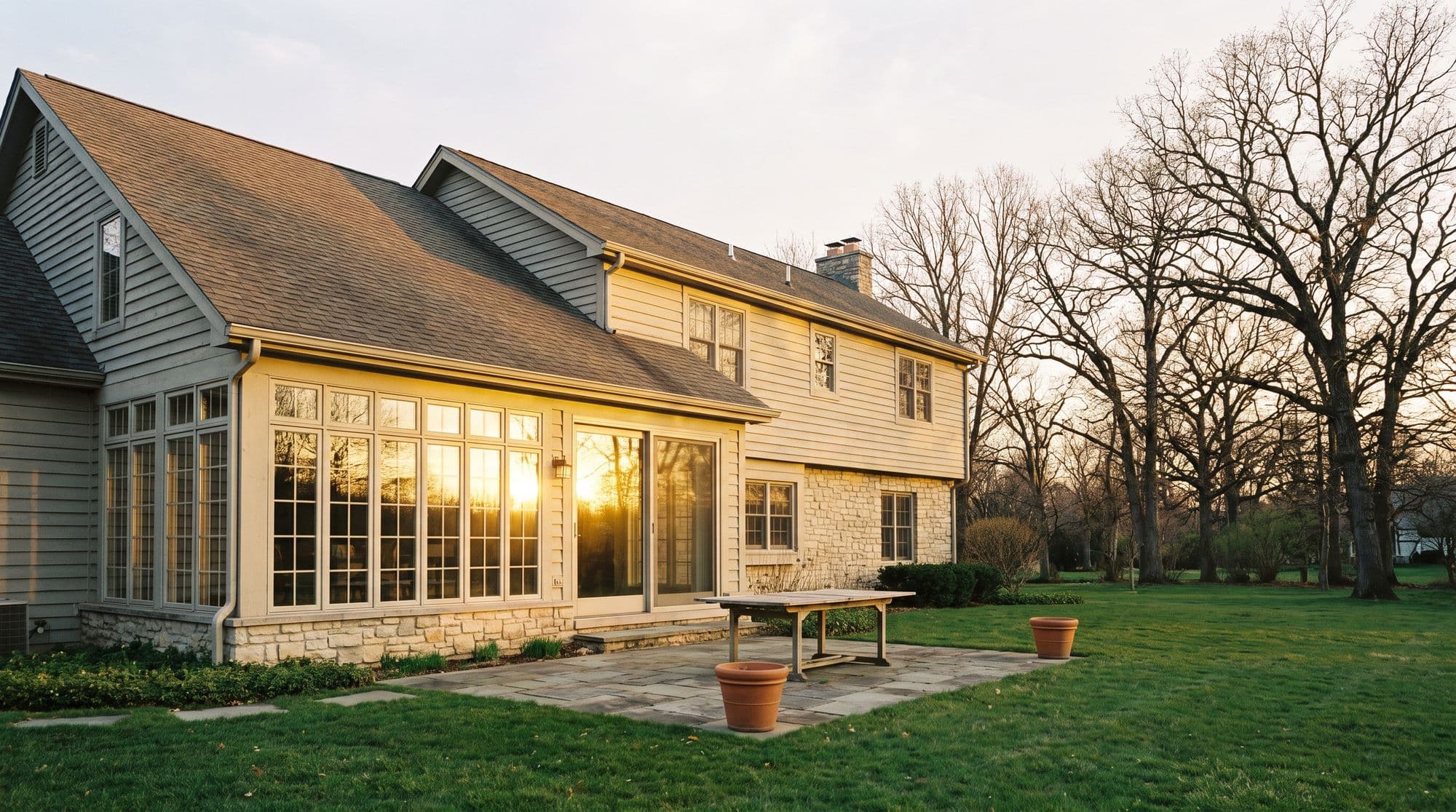
- Sunrooms and large sliding doors
Reflective privacy film works when it is brighter outside than inside. At night, with lights on indoors, the effect reverses. If you need privacy after dark, frosted film is usually the better choice. Stewart can talk through which option fits each window.
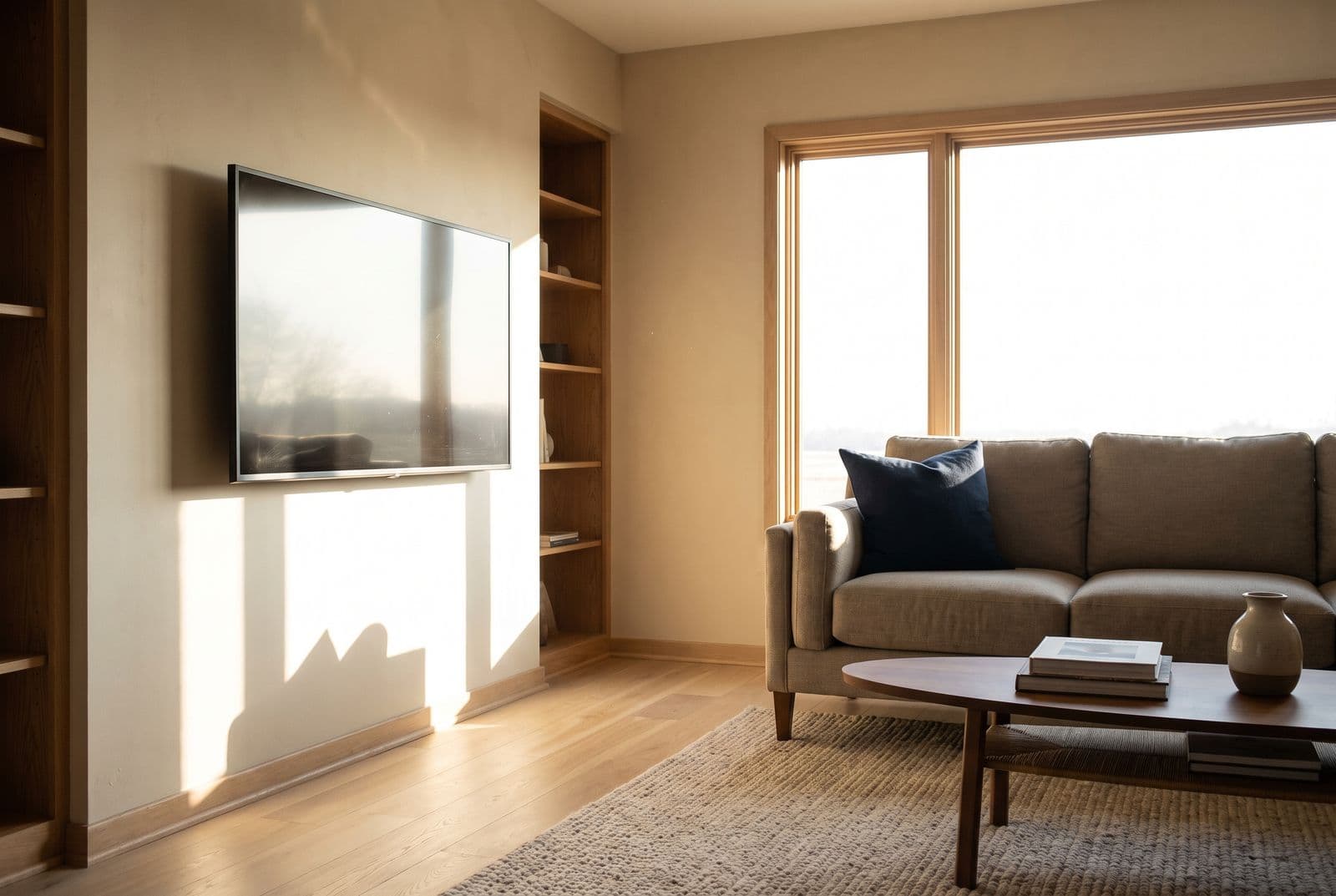
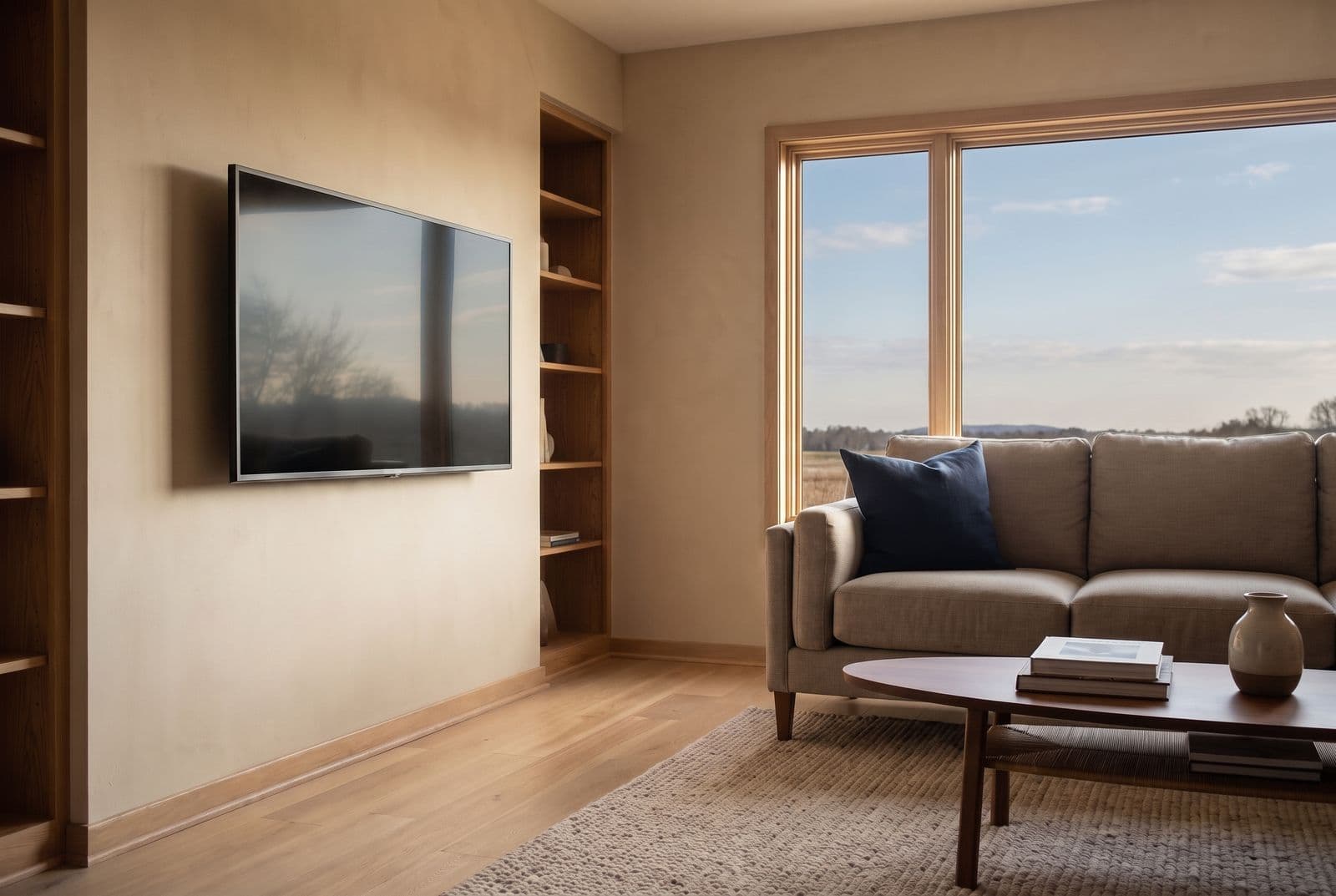
West-facing, four o’clock
The same room, once the film is on.
01 · Heat
Less heat through the glass.
Solar film reduces the sun heat that comes through the window, so the sunny side of the house is more comfortable in the afternoon.
02 · Glare
The glare goes. The daylight stays.
Transmitted light drops to a level where the television and the surfaces by the window are usable at four o'clock, without the room going dim.
03 · Fading
Less UV on floors and furniture.
Window film reduces ultraviolet light, a major cause of fading in flooring, upholstery and artwork. Fading has other causes too, so film helps rather than stops it.
04 · Privacy
From the street, it reads as tinted.
From inside, the view and the daylight are exactly where they were. Reflective film reverses after dark once the lights are on; frosted film does not.
One photograph, treated image-to-image. Nothing in the room moves between the two frames.
Start from the room, not the product.
Nobody wakes up wanting window film. They want one room to stop being the hot one. These are the situations film gets asked about most, and what actually goes on the glass.
- West-facing living roomComfortable in the morning, unusable from mid-afternoon. The air conditioning never catches up.Heat control film
- Two-story great roomThe upper glass is the part no blind reaches, and it is doing most of the heating.Solar control film
- Patio doorsA large glass plane facing the garden. Heat in summer, glare on the television, fading on the floor in front of it.Solar control film
- Front door and sidelightsAnyone on the step can see straight down the hall, and a curtain on a door is awkward.Frosted privacy film
- Bathroom and en-suitePrivacy is needed day and night, but the room still has to hold daylight.Frosted privacy film
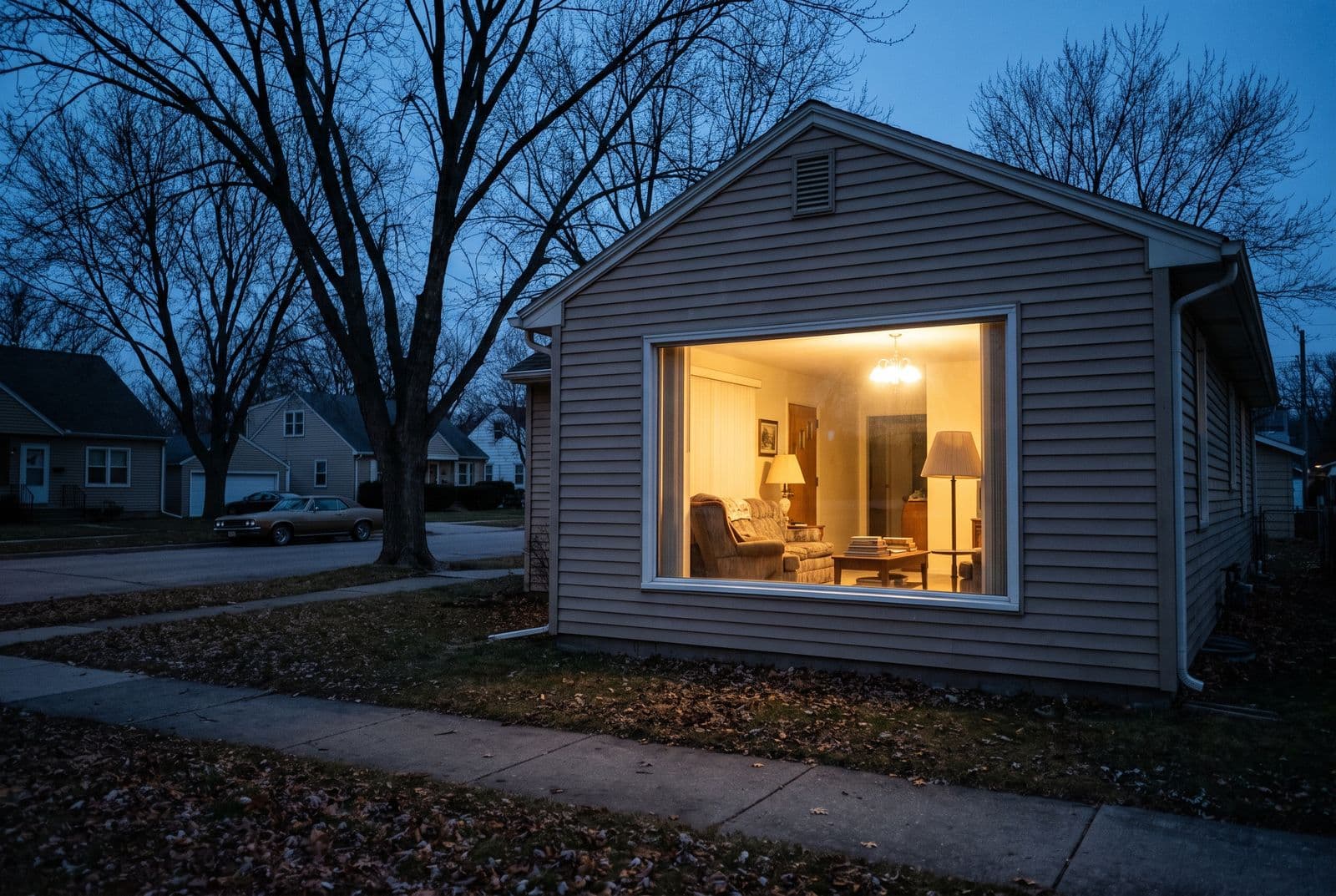
- Street-facing front roomPassers-by can see in during the day, so the blinds stay shut and the room stays dark.Reflective privacy film
- Rooms with hardwood, rugs or artworkA line across the floor where a rug used to be. Fading is cumulative and it does not reverse.Solar control film
- Stair and landing glazingFull-height glass that is hard to dress, easy to walk into, and bright at the wrong time of day.Decorative film
Straight answers.
Short answers to the questions Stewart hears most.
Yes. Estimates are free.
Yes. Estimates can be provided remotely from your measurements and photos, or through a site visit. Tell Stewart which you would prefer on the estimate form.
Your city or ZIP code, roughly how many windows you want treated, the approximate width and height of each one (rough numbers are fine), and a few clear photos of the windows from inside. A line about what you want to fix, such as heat, glare, privacy or UV, helps too.
Yes, small commercial jobs such as small offices and storefronts. Stewart is owner-operated and does not have a crew for large projects, so each commercial inquiry is reviewed individually.
Yes. Call or text (636) 575-6564. If Stewart cannot pick up, leave a voicemail with your name and number.
Decide which windows you want treated and measure the width and height of each if you can. Take photos from inside, ideally when the sun is hitting the room, so Stewart can see the glare or heat. If a site visit is needed, make sure the windows are easy to reach.
Other film we install
- Small commercialWindow film for small offices, storefronts and shops: heat, glare and privacy.Read more
- Heat controlSolar film that reduces sun heat at the glass so sun-facing rooms are more comfortable.Read more
- PrivacyReflective and frosted film for street-facing windows, bathrooms and glass doors.Read more
- DecorativeFrosted and patterned film for privacy that still lets the light in.Read more